
































Application Acceleration Manager: What It Is and How It Speeds Up Apps
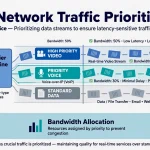
Slow applications frustrate users, lose sales and strain support teams. An application acceleration manager is a technology designed to fix that problem by optimizing how applications are delivered over a network. Whether it is a dedicated appliance, a…

What Is CJIS? Security Policy Levels and Compliance Explained
CJIS stands for the Criminal Justice Information Services division of the U.S. Federal Bureau of Investigation. The CJIS Security Policy is the set of rules that governs how criminal justice information is accessed, stored, transmitted and protected. If…
Certificate of Networthiness (CoN): What It Is and How to Get One
If you want to sell technology or IT services to the United States government, you will quickly meet a term that sounds like a formality but can decide whether you win work: the Certificate of Networthiness, usually shortened to CoN. A certificate of…

What Are Data Centers? Types, Components and How They Work
Every search, video stream, bank transaction and cloud application you use depends on a building most people never see: a data center. But what are data centers, exactly, and why do they matter so much for security, reliability and performance? In simple…

SOC 2 Type II: What It Is, How the Audit Works and Why Customers Ask for It
SOC 2 Type II is an independent audit report that proves a service provider’s security controls do not just exist on paper — they actually worked, consistently, over a period of months. If you sell software, hosting, or any service that stores…

What Is Adware? How It Works, Why It Is Risky and How to Remove It
What is adware? Adware is software that shows you unwanted adverts — pop-ups, banners, injected ads and sponsored links — usually without your clear consent. The name comes from “advertising-supported software”, but the adware most people meet is not the…

NERC CIP: What Are the Critical Infrastructure Protection Standards?
NERC CIP stands for the North American Electric Reliability Corporation Critical Infrastructure Protection standards. They are a set of mandatory cybersecurity and physical-security rules for the organisations that operate North America’s bulk…

What Is SASE? Secure Access Service Edge Explained Simply
What is SASE? SASE (pronounced “sassy”) stands for Secure Access Service Edge. It is a cloud-based way of delivering network connectivity and network security together, as a single service, instead of running separate boxes in offices and data centres.…

BYOD Meaning: What Is Bring Your Own Device and Is It Safe?
BYOD meaning is simple: BYOD stands for “bring your own device.” It is a workplace policy that lets employees use their personal phones, laptops and tablets to access company systems, email, files and apps, instead of — or alongside — company-owned…

IPS Meaning: What Is an Intrusion Prevention System and How Does It Work?
IPS meaning is simple to state and important to understand: IPS stands for intrusion prevention system. It is a security tool that watches network traffic in real time, compares it with known attack patterns and behaviour rules, and blocks or drops…