
































Application Security Manager: What the Role Does and How to Become One
An application security manager leads the team and program that keep software safe from design to deployment and beyond. The role sits between engineering, security, and product leadership: it turns security goals into practical checks, tools, and habits…

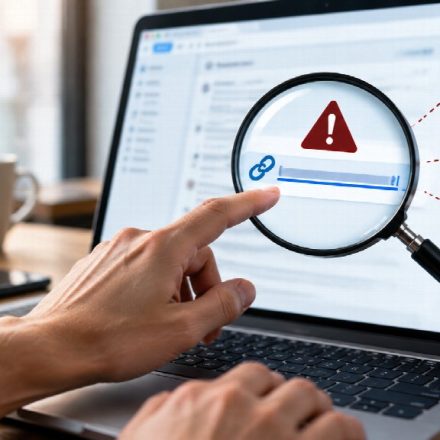
Spoofing: 7 Warning Signs and How to Stop Fake Calls, Emails, and Websites
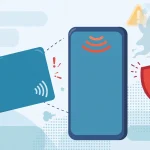
Your phone rings, and the screen shows your bank’s name. Your email inbox shows a message from a colleague you trust. A website looks exactly like the one you use every day. In each case, what you see may not be real. That is spoofing: a trick in…
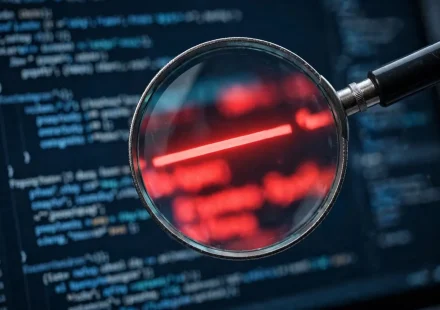
Define Vulnerability: 7 Key Facts That Make Cyber Security Clearer
To define vulnerability in cyber security, start with a simple idea: a vulnerability is a weakness that an attacker can use to harm a system, steal data, or disrupt a service. The weakness may be in software, hardware, a configuration, or even a human…

Rogue System Detection: 7 Ways to Find Unknown Devices Fast
Rogue system detection is the practice of finding computers, phones, servers, and other devices on a network that should not be there, or that have not been approved. If you cannot see every device connected to your network, you cannot protect it. An…

AI Governance: 7 Steps to Safer, More Trustworthy AI
AI is now used to screen job applicants, approve loans, sort medical images, write customer replies and run chatbots. Those systems can save time and money, but they can also make biased decisions, leak private data or fail in ways that are hard to…

Gramm-Leach-Bliley Act (GLBA) Explained: Privacy, Safeguards, and Compliance
If your business touches customer financial information, the Gramm-Leach-Bliley Act is not optional background reading. It is the federal law that tells financial institutions how to explain their privacy practices, limit sharing, and protect sensitive…
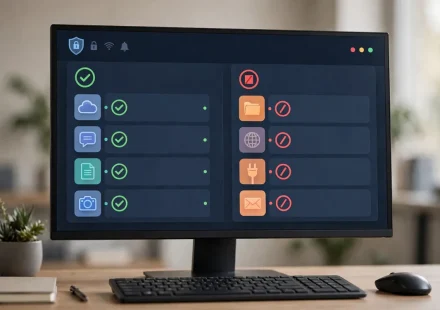
Application Control Engine: 7 Steps to Stop Unauthorized Software
An application control engine is the security control that decides, in real time, which programs are allowed to run on a device, server, or cloud workload — and which must be stopped before they can do any harm. If antivirus asks, “Do I recognize this…
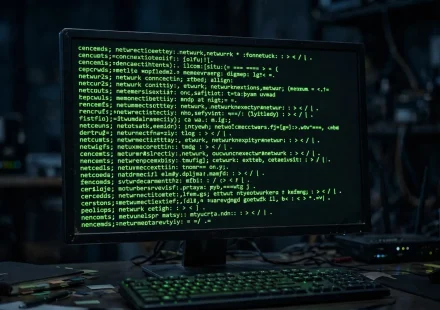
Netstat: 7 Essential Commands to Spot Suspicious Connections Fast
Every computer that connects to a network leaves a trail. Some connections are ordinary, such as a browser fetching a web page or a mail client checking for new messages. Others are less welcome: a program quietly contacting an unfamiliar server, a port…
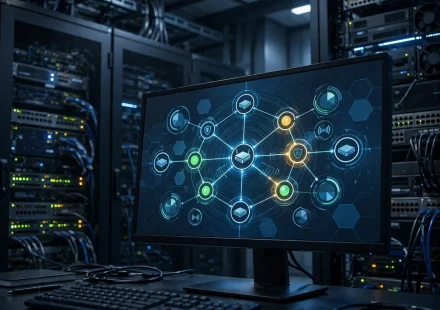
What Is SNMP? 7 Ways It Powers Safer Network Monitoring
SNMP is the quiet protocol behind much of modern network monitoring. When a router gets hot, a switch port goes down, or a server disk fills up, SNMP is often the system that notices first and tells the administrator. Without it, teams would have to…

DTMF: Definition, How Touch-Tone Signaling Works and Uses
If you have ever pressed keys during a phone call to navigate a menu, enter an account number or confirm a payment, you have used DTMF. Dual-tone multi-frequency signaling, better known as touch-tone dialing, is the system that turns each key press on a…