
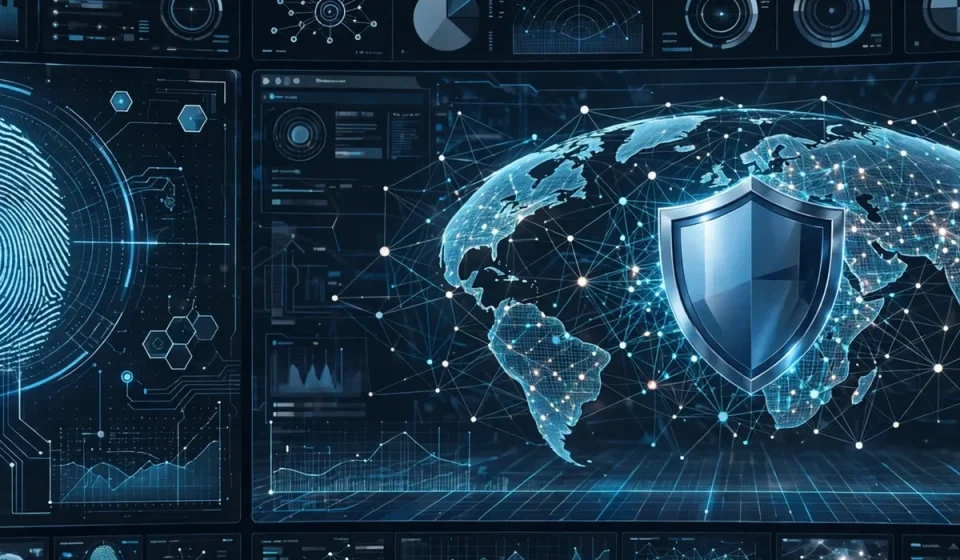

CJIS stands for the Criminal Justice Information Services division of the U.S. Federal Bureau of Investigation. The CJIS Security Policy is the set of rules that governs how criminal justice information is accessed, stored, transmitted and protected. If your organization works with law enforcement data, whether you are a police department, a contractor, a cloud provider or a software vendor, CJIS compliance is not optional background reading. It is a condition of access.
This guide explains what CJIS is, what kind of information it protects, how the security policy is organized, what compliance requires in practice, and how organizations can prepare for an audit without disrupting their work.
What Is CJIS?
CJIS is the FBI division that provides criminal justice agencies with systems and services for sharing information, including fingerprint identification, background checks and access to national criminal history databases. Through systems such as the National Crime Information Center (NCIC) and the Interstate Identification Index, authorized agencies can check records that help them make decisions about arrests, hiring, licensing and public safety.
Because this information is highly sensitive, access comes with strict conditions. The CJIS Security Policy, updated regularly, sets minimum security requirements for any organization that accesses, processes or stores criminal justice information (CJI). State CJIS systems agencies, known as CSAs, oversee compliance within each state, and the FBI audits agencies and their vendors to verify that the policy is being followed.
What Counts as Criminal Justice Information?
Criminal justice information includes biometric data such as fingerprints, criminal history records, and information that can identify a person in connection with criminal justice processes. It also includes data derived from those systems, for example when a record is copied into a local database, emailed, printed or displayed on a screen. Once data originates from a CJIS system, the policy’s protections generally follow it, even when it moves to another system or a contractor’s environment.
That reach is important for cloud and IT providers. A vendor that merely hosts or supports a system containing CJI may be in scope for CJIS requirements, even if it never directly queries a national database. Contracts should therefore state CJIS responsibilities clearly, including who manages access controls, encryption, logging, incident response and personnel screening.
Security Policy Areas
The CJIS Security Policy is organized into policy areas that cover the full lifecycle of information protection. The main areas include information exchange agreements, security awareness training, incident response, auditing and accountability, access control, identification and authentication, configuration management, media protection, physical protection, systems and communications protection, and personnel security. Each area contains specific requirements, and auditors test them against evidence, not intentions.
Two requirements deserve special attention because they surprise many newcomers. First, personnel security: anyone with unescorted access to CJI or to systems containing it typically needs a fingerprint-based background check and a favorable determination before access is granted. Second, advanced authentication: remote access to CJI generally requires multi-factor authentication, so a password alone is not enough. These controls reflect the sensitivity of the data and the risk that a single compromised account could expose national records.
Compliance Levels and How They Work
CJIS does not use a simple tiered grading system like some frameworks, but compliance is often described in practical levels: policy adoption, technical implementation, personnel compliance and audit readiness. An organization first adopts the policy and signs the required agreements, then implements the technical and administrative controls, ensures staff are screened and trained, and finally demonstrates compliance through documentation, testing and audit. A gap in any level can lead to findings, corrective action and, in serious cases, suspension of access.
| Compliance Stage | What It Involves | Typical Evidence |
|---|---|---|
| Agreements and governance | Signed agreements, defined roles, CSA coordination | Agreements, policies, responsibility matrix |
| Personnel security | Background checks, training, access approvals | Screening records, training logs |
| Technical controls | Access control, encryption, MFA, logging | Configurations, scan results, logs |
| Physical and media controls | Secure facilities, media handling and disposal | Access logs, disposal records |
| Audit and continuous monitoring | Regular reviews, incident handling, corrective action | Audit reports, incident records |
Cloud services add another layer. If CJI is stored or processed in the cloud, the agency must ensure the provider meets CJIS requirements, including data location, encryption, access logging and personnel screening for provider staff with access. Not every commercial cloud service is suitable for CJI without additional controls and contractual commitments, so agencies should validate a provider’s CJIS posture before migration, not after.
Steps to Achieve CJIS Compliance
1. Determine scope and responsibility
Map every system, vendor and data flow that touches CJI. Identify which organization is the criminal justice agency, which are contractors or providers, and who is responsible for each policy area. Ambiguity here creates gaps later.
2. Conduct a gap assessment
Compare current controls against the latest CJIS Security Policy, area by area. Prioritize gaps that affect access control, authentication, encryption and logging, and create a remediation plan with owners and dates.
3. Implement and document controls
Apply technical controls, update policies and procedures, complete personnel screening and training, and collect evidence as you go. Documentation created during implementation is far easier to defend in an audit than documentation reconstructed afterwards.
4. Test incident response and auditing
Test how you detect, report and respond to incidents involving CJI, and verify that audit logs capture who accessed what, when and from where. Regular reviews of logs and access rights catch problems that one-time checks miss.
5. Prepare for audit and maintain compliance
Organize evidence by policy area, rehearse audit interviews, and correct findings promptly. Compliance is continuous: policy updates, staff changes, new systems and new vendors all require reassessment.
Common Mistakes to Avoid
Common mistakes include allowing shared accounts, delaying background checks, storing CJI on unmanaged personal devices, emailing sensitive records without encryption, and failing to log access adequately. Another frequent error is assuming that a general security certification covers CJIS. Frameworks such as SOC 2 can support CJIS work, but they do not replace the policy’s specific requirements for personnel screening, advanced authentication and audit logging. Treat CJIS as its own compliance program, even when it overlaps with other frameworks.
Related assurance work follows a similar discipline. For an overview of independent security audits, see what an information security audit covers. To understand how audit reports evidence controls at service providers, read about SOC 2 Type II audits. And for a comparable government approval process, see this guide to the Certificate of Networthiness and how to get one.
Frequently Asked Questions
What is CJIS?
CJIS is the FBI’s Criminal Justice Information Services division, which provides systems for sharing criminal justice information and sets the security policy governing access to that information.
What is the CJIS Security Policy?
It is the FBI’s set of minimum security requirements for accessing, storing, transmitting and protecting criminal justice information, covering areas from authentication to incident response.
Who must comply with CJIS?
Criminal justice agencies, contractors, vendors and cloud providers that access, process or store criminal justice information, as overseen by the FBI and state CJIS systems agencies.
Does CJIS require multi-factor authentication?
Yes, remote access to criminal justice information generally requires advanced authentication, typically multi-factor authentication, in addition to strong password and account controls.
What happens if an organization fails a CJIS audit?
Findings require corrective action, and serious or uncorrected noncompliance can lead to restrictions or suspension of access to CJIS systems until the issues are resolved.


[…] for example, often require advanced authentication for remote access, as explained in this guide to what CJIS is and its security policy. Device policies also matter when personal phones are used as authenticators, so see what bring […]