
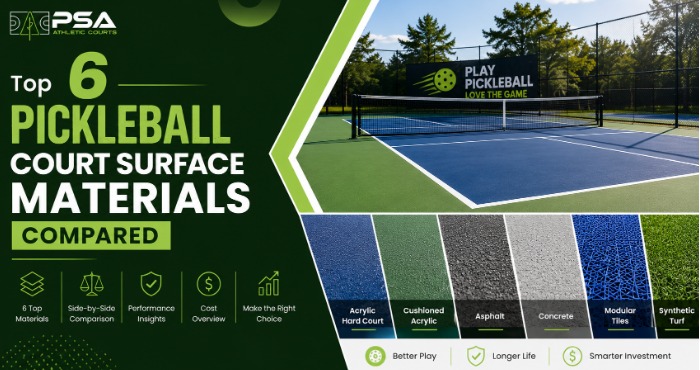

Top 6 Pickleball Court Surface Materials Compared
Choosing the right pickleball court surface is one of the most important decisions when building or renovating a court. The surface affects ball bounce, player comfort, safety, maintenance, and long-term durability. Whether you’re planning a backyard court, a school facility, or a community sports complex, selecting the right pickleball court surface material can improve performance while reducing maintenance costs. Here’s a comparison of six popular surface options to help you make an informed decision.
Why Choosing the Right Pickleball Court Surface Matters
A high-quality pickleball court surface provides consistent playability, reliable traction, and resistance to weather and heavy use. The right surface also minimizes cracking, improves drainage, and extends the court’s lifespan. Factors such as climate, expected traffic, and maintenance budget should all influence your choice of pickleball court surface material.
Top 6 Pickleball Court Surface Materials Compared
1. Acrylic-Coated Asphalt
Acrylic-coated asphalt is one of the most common outdoor court options. It offers a durable playing surface with excellent traction and consistent ball bounce. The protective pickleball court surface coating shields the asphalt from UV rays and moisture while allowing players to enjoy a professional-quality playing experience.
2. Acrylic-Coated Concrete
Concrete provides a stable foundation and requires minimal structural maintenance. When combined with a premium pickleball court surface coating, it creates a smooth, long-lasting court suitable for schools, parks, and recreational facilities. Although installation costs may be higher, its durability often makes it a worthwhile investment.
3. Cushioned Acrylic Surface Systems
For facilities that host frequent games or tournaments, cushioned acrylic systems offer added comfort. Multiple layers of pickleball court surface coating help absorb impact, reducing stress on players’ knees and joints while maintaining excellent traction and consistent ball response.
4. Modular Sport Tiles
Modular sport tiles have become increasingly popular for residential and temporary installations. These interlocking tiles provide effective drainage, simple installation, and easy replacement if individual sections become damaged. They’re also available in various colors and require relatively little maintenance.
5. Post-Tension Concrete
Post-tension concrete is designed to reduce cracking caused by ground movement and changing temperatures. This premium pickleball court surface material is often selected for commercial sports facilities where long-term durability and structural stability are priorities.
6. Asphalt with Color Coating
Standard asphalt finished with a high-quality color pickleball court surface coating offers an affordable solution for many outdoor courts. The coating enhances appearance, improves traction, and protects the surface from weather damage while making future resurfacing projects more straightforward.
How to Choose the Best Pickleball Court Surface Material
The best pickleball court surface material depends on how the court will be used. Outdoor courts benefit from weather-resistant surfaces, while indoor facilities may prioritize player comfort and consistent play. Consider factors such as installation budget, maintenance requirements, expected usage, and local climate before making your decision. Investing in quality materials from the start can reduce repair costs over time.
Why Pickleball Court Surface Coating Is Essential
A professional pickleball court surface coating does more than add color. It protects the underlying surface from UV exposure, moisture, and everyday wear while improving grip and playability. Regular recoating helps preserve the appearance of the court, extends its lifespan, and ensures a safer playing environment for athletes of all skill levels.
Keep Your Court Performing at Its Best
Even the best pickleball court surface requires regular maintenance. Sweep away debris, remove standing water, inspect for small cracks, and clean the court periodically to prevent surface deterioration. Reapplying a quality pickleball court surface coating when recommended helps maintain consistent performance and protects your investment for years to come. If you’re planning a new court or future upgrades, use a pickleball court designer to explore surface materials, colors, and layouts before starting your project.
Choosing the right pickleball court surface material is essential for creating a court that delivers reliable performance, long-term durability, and low maintenance. By comparing your options and investing in the appropriate surface and coating system, you can build a court that provides an enjoyable playing experience for years to come.