
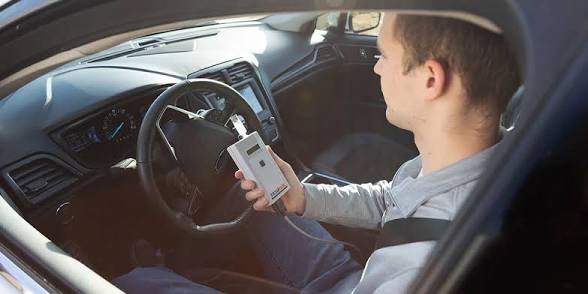

Most people underestimate the amount of “stuff” that is needed to administer an interlock after the initial installation of the device. After about a week or so, of inserting your saliva into the interlock tube to start your car, that becomes 2nd nature to you. The real issues that people have with interlocks are the little administrative items that tend to add up before you know it.
The biggest surprise to handing someone off to be able to drive after they have been handed an interlock requirement is that the interlock device itself is the easiest part of all of this to complete after they have been handed the requirement to install an interlock device on their vehicle(s). In order to complete the requirement to comply with the interlock device requirement, in order to have the interlock requirement removed from after their license(s) have been suspended for driving while intoxicated, they will have to complete a period of time in which they will have to drive only after they have started their vehicle while having blown into the tube on the interlock device in order to provide a sample of their breath in order to determine their Blood or Breath
Alcohol Content, or BAC, in order to make sure that they have not been drinking after they have left where ever it is that they were before they get behind the wheel of their vehicle(s) in order to drive to wherever it is that they are going after they have left. As long as the results of the sample(s) of their breath are greater than or equal to .00, the interlock will allow the vehicle to start to be driven and the results will be reported to the monitoring agency where they can be reviewed for the remainder of the compliance period.
What the compliance period actually requires
An interlock compliance period or requirement is a court or DMV ordered time period in which a driver, with a past DUI conviction, must drive only a vehicle equipped with a Breath Alcohol Ignition Interlock Device, or IID. The interlock reporting device is a reporting device that is reporting whether or not a driver is operating under the influence of alcohol during every use. The monitoring agency for the interlock reports all information from the IID to the court or state agency which mandated the interlock requirement. This reporting includes all breath test results, including any instances in which a violation of the terms of the interlock requirement have occurred. Most states require a minimum amount of time that must pass before an individual with a past DUI conviction can have their requirement for an interlock removed.
Most states require:
- Installation at an approved service center within a specific timeframe after conviction
- Regular calibration visits, usually every 30 to 60 days depending on your state and provider
- Zero confirmed alcohol readings above the state’s threshold (often 0.025 BAC, which is well below the legal driving limit)
- Continuous use, meaning you can’t swap vehicles mid-period to dodge the requirement
There are many IID violations that are caused when a driver fails to complete a required service or monitoring appointment, even though the driver did not have a high BAC reading while driving a vehicle that is equipped with an ignition interlock device. As part of the requirements for an IID, the device must be recalibrated every 30 days or at the end of the life of the fuel cell, whichever comes first. If an appointment for a required calibration is not completed on time, the device will lock out and additional steps must be completed to restore use of the vehicle.
Where most people actually slip up
Take the time to put the next interlock maintenance appointment in your calendar when you are at the repair center – ideally while still at the center and still on site. Write the time on your two thumbs to remember it. You can count on the repair center to send you reminders. But these should only be your primary means of keeping track of your compliance requirement if you have no other means. Just as one or more smoke detectors are not enough to provide protection from fire in a large house, a single reminder, whether by text or by mail, is not enough to provide a safe margin of error in meeting a repair/maintenance requirement for your interlock.
Note: You will receive reminders from the service center where you had the IID serviced, but you need to put these appointments into your calendar as well. This will be your primary safety net to not miss a critical appointment for a calibration or for an installation of an IID. Just having the appointment in your calendar will keep you on track and prevent you from missing a critical calibration window that will result in an automatic lockout and subsequently a violation for all subsequent breath tests – even if you were blowing well under the legal limit for alcohol.
You will need to have an interlock device installed on all of the vehicles that you drive as a part of your VASAP requirements in Virginia. If you are a resident of central Virginia and need an interlock installer located in Lynchburg, for example, you can look up RoadGuard Interlock devices for VASAP at https://roadguardinterlock.com/locations/virginia/location-city-lynchburg/. (Here is a side bar: There is an approved list of providers for interlocks in the state of Virginia, should a Driver be assigned VASAP requirements by the court. This list can be found online, for instance here is the VASAP interlock Lynchburg Virginia page for the city of Lynchburg.
At Road Guard Interlock, the Lynchburg, VA facility can provide calibration and installation for vehicles requiring IIDs as part of the Driver’s VASAP program. Service centers for interlock devices are typically located within the service centers of breath test providers that are approved through the state and are listed on line for public review. The Road Guard Interlock provider listed above for the Lynchburg, VA city location, services vehicles for VASAP assigned Drivers needing an interlock equipped vehicle and provides interlock installation and calibration for the monitoring agency assigned by the court for the Driver. These interlock monitoring agencies typically monitor the interlock equipped vehicle 24/7 for the length of time that the Driver is required to have an interlock on their vehicle as ordered by the court
Reading your device’s data report
Interlock devices and providers give their customers access to test results for their interlocks either through the interlock itself or online through logs and summaries. Most people don’t go to look at their interlock test results because they believe that they did well on all of the tests required to comply with their interlock device. In looking at interlock test results, a person with an interlock will typically find information that reveals problems with the required tests that the person using the interlock had no idea existed.
By and large most people never look at their data report. They should from time to time look at the report to determine prior to a compliance review the reasons for recorded events on the interlock in order to avoid the occurrence of a circumstance that could cause a violation or even worse a number of violations prior to the compliance review that could cause jeopardy to a person’s compliance. Common problems with interlock devices and their reports include instances where a retest is taken while the interlock is still in the process of rolling for a previous retest. This retest could be adversely affected by circumstances such as background noise while driving. The results of such a test could be recorded in an unusual manner and could create problems for the monitoring agency.
| Common violation type | How it usually happens | How to avoid it |
| Missed calibration | Forgetting or delaying the service appointment | Schedule the next visit before you leave the service center |
| Failed breath test | Alcohol use, or certain foods/mouthwash | Avoid alcohol entirely; rinse mouth with water before testing |
| Circumvention attempt | Asking someone else to provide the sample | Don’t. Cameras and rolling retests exist precisely for this reason |
| Device tampering | Attempting to disconnect or modify the unit | Contact your provider for any technical issues |
Early removal from an interlock requirement.
Some states grant early removal of an interlock after the end of a clean section of the required period of compliance. The offender must petition the court or licensing agency and present information regarding the interlock monitored data. The decision is left to the court or licensing agency and can be based on information totally unrelated to the offender’s behavior after having been required to install an interlock. Usually the offender is judged on the basis of the offense for which he/she was required to install an interlock. Therefore, the variables that an offender cannot control far outweigh the variables that the offender can control.
What consistently helps, though:
- A completely clean data record with no flagged events
- All calibration visits completed on time, every time
- Prompt communication with your monitoring program if any issues arose
Almost all people who go through an interlock program speak very favorably of their experience during the compliance period. People describe treating their time in compliance much like a job that they needed to perform well. They say that they treated their interlock very seriously and reported themselves every time that they drove a vehicle equipped with an interlock. The vast majority of people report treating their interlocks very seriously and doing their absolute best to ensure that they reported properly every time that they drove. So while being in compliance with an interlock program is something that a person can do while waiting for the compliance period to expire, for most people it is something that they treat as a process that they attempt to manage as best as they are able and that they complete successfully.
And lastly, carry a package of alcohol-free mouthwash with you. While driving around with a mouth full of regular Listerine would be very bad for you (and clearly indicate that you knew you had been drinking), having alcohol-free mouthwash in your car would be good. So, keep some of that with you.