
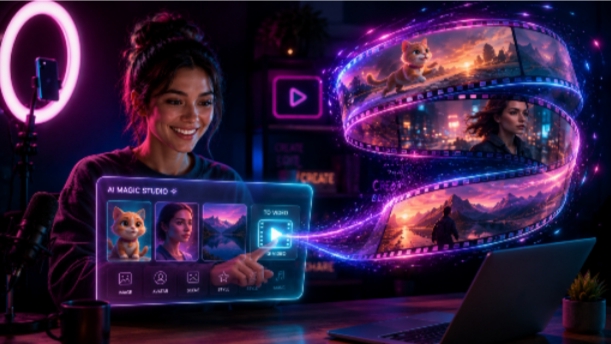

Artificial intelligence has changed the way people create and edit visual content. What once required professional software, animation skills, and hours of editing can now be done with AI-powered tools. From turning a simple photograph into a short video to creating an animated dance from a static image, modern AI solutions make visual storytelling much easier.
Whether you are a content creator, marketer, social media user, or simply someone who enjoys experimenting with creative technology, tools for AI photo to video free creation can help you produce engaging content without complicated editing workflows.
What Is AI Photo to Video?
AI photo-to-video technology transforms a static image into an animated video. Instead of manually adding movements, transitions, or effects, AI analyzes the image and generates motion based on your instructions or selected effects.
For example, you can upload a portrait and create subtle facial movements, camera zooms, background motion, or other cinematic effects. This can make ordinary photos feel more dynamic and suitable for social media posts, presentations, advertisements, and personal projects.
Many platforms offer free options, allowing beginners to experiment with AI animation without purchasing expensive editing software. However, free plans may include limitations such as watermarks, shorter video durations, or a restricted number of generations.
How AI Dance Generators Work
One of the most entertaining applications of image animation is an AI dance generator. These tools can take a photo of a person or character and generate a dancing video based on AI-generated motion.
The technology generally uses computer vision and motion-generation models to identify the subject’s body structure and apply realistic movements. Depending on the platform, users may be able to select different dance styles, upload a reference video, or choose predefined movements.
AI dance generation has become popular among social media creators because it provides a quick way to produce entertaining short-form videos. Instead of recording a complete dance performance, creators can experiment with an existing photograph and turn it into an animated clip.
Of course, users should make sure they have permission to use photos of other people, particularly when creating realistic videos featuring identifiable individuals.
Create Original Visuals With an AI Image Generator
While photo-to-video tools animate existing pictures, an AI image generator can create completely new images from text descriptions. You can describe a character, environment, product, or scene, and the AI can generate a visual based on your prompt.
For example, a simple prompt such as “a futuristic city at sunset with flying vehicles” can produce an original image that can later be animated using an AI video tool.
This combination creates a powerful creative workflow:
- Generate an original image with AI.
- Improve or customize the image if necessary.
- Upload it to an AI photo-to-video tool.
- Add motion, camera effects, or character animation.
- Export the finished video for social media or other projects.
This workflow can be especially useful for creators who do not have access to professional photography equipment or animation software.
Benefits for Content Creators
AI visual tools offer several advantages. First, they can significantly reduce the time required to create content. A traditional video project may involve filming, editing, lighting, and post-production, while an AI workflow can produce an initial concept within minutes.
Second, these tools encourage experimentation. Creators can test different images, prompts, movements, and styles without having to reshoot an entire project.
AI-generated visuals can also help businesses create promotional content. Product concepts, social media graphics, animated advertisements, and visual presentations can all benefit from AI-assisted creation.
Tips for Better AI Videos
The quality of the final result often depends on the source image and instructions provided to the AI. Use clear, high-resolution images whenever possible. A subject with good lighting and a simple background is usually easier for AI systems to analyze.
When generating motion, avoid trying to create overly complicated movements immediately. Start with simple animation and gradually experiment with more advanced effects.
If you are using an AI image generator first, provide specific prompts describing the subject, environment, lighting, camera angle, and visual style. More detailed instructions can help produce results that better match your intended concept.
The Future of AI Visual Creation
AI-powered image and video technology continues to develop rapidly. As these systems become more sophisticated, creating animated content from a single image will become increasingly accessible.
From AI photo to video free tools and AI dance generators to advanced image-generation platforms, creators now have more ways to transform ideas into visual content. The key is to use these technologies creatively and responsibly while respecting copyright, privacy, and consent.
For beginners and experienced creators alike, AI offers an exciting opportunity to explore new forms of storytelling without requiring advanced technical skills.