
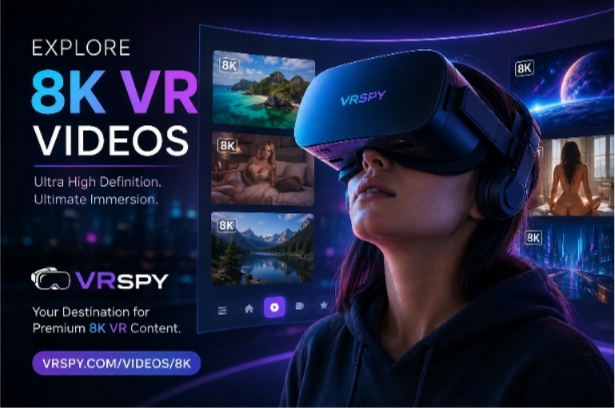

Virtual reality has transformed the way people experience digital entertainment. Instead of watching content on a traditional screen, VR technology allows viewers to enter a more immersive environment and interact with digital experiences in a completely different way.
As VR headsets become more advanced, VR videos are becoming increasingly popular among people looking for realistic and engaging entertainment. Better displays, improved motion tracking, spatial audio, and higher video resolutions are making virtual experiences more detailed than ever.
What Are VR Videos?
VR videos are digital videos designed to create an immersive viewing experience through a virtual reality headset. Depending on the format, viewers may be able to look around a 360-degree environment or experience video content from a more interactive perspective.
Unlike conventional videos, VR content can provide a stronger sense of presence. The viewer isn’t simply looking at a flat screen; the surrounding virtual environment becomes part of the experience.
Why High-Resolution VR Videos Matter
Video quality plays an important role in virtual reality. A low-resolution video can appear blurry or lack detail when viewed through a VR headset. High-resolution content, on the other hand, can provide sharper images and a more realistic experience.
Modern VR platforms are increasingly offering high-quality video formats, including 4K and 8K content. For viewers interested in exploring 8K VR videos, VRSpy provides a dedicated collection of high-resolution VR video content.
Higher resolution can be particularly useful in VR because the image is viewed through a headset at close range. More pixels can help improve visual clarity and make immersive scenes appear more detailed.
The Growth of 8K VR Content
8K technology represents another step forward in immersive video. With a significantly higher pixel count than standard HD formats, 8K can provide greater detail when the content is properly produced and the viewing hardware supports it.
For VR creators, higher resolution can help preserve image quality across a wide field of view. For viewers, it can make virtual environments feel clearer and more realistic.
However, resolution isn’t the only factor that determines VR video quality. Frame rate, camera quality, compression, lighting, audio, and headset capabilities can all influence the final viewing experience.
VR Headsets and Immersive Viewing
A VR headset is the primary device used to experience virtual reality videos. Modern headsets are designed to provide high-resolution displays and responsive motion tracking.
Important features to consider when choosing a headset include:
- Display resolution
- Refresh rate
- Field of view
- Motion tracking
- Comfort
- Audio quality
- Battery life
- Storage capacity
- Compatibility with VR applications
A capable headset can make high-quality VR videos significantly more enjoyable.
Spatial Audio Makes VR More Realistic
Visual quality is only one part of immersive entertainment. Sound also plays a major role in creating a realistic virtual environment.
Spatial audio can make sounds appear to come from different directions. When combined with VR video, this can create a stronger sense of presence and make the experience feel more natural.
High-quality visuals and immersive audio work together to create a more complete virtual entertainment experience.
Streaming VR Videos
As internet speeds continue to improve, streaming has become an important way to access VR content. Users don’t always need to download large video files before watching them.
However, high-resolution VR videos can require significant bandwidth. A stable and fast internet connection can help reduce buffering and provide smoother playback.
For the best experience, viewers should consider their internet speed, headset capabilities, and the quality of the video being streamed.
The Future of Immersive Entertainment
VR entertainment continues to develop as hardware and video production technologies improve. Higher resolutions, better cameras, improved displays, spatial audio, and faster internet connections are helping creators produce increasingly immersive experiences.
The availability of high-quality VR video libraries is also giving viewers more choices. From entertainment and gaming to virtual experiences and specialized video content, VR is becoming a broader part of the digital media landscape.
Choosing Quality VR Content
When exploring VR videos, viewers should consider both video quality and the platform providing the content. A good VR experience depends on more than just resolution.
Users should look for:
- High-quality video production
- Good image clarity
- Smooth playback
- Compatible formats
- Reliable streaming
- A wide selection of content
- Easy navigation
Choosing content that matches the capabilities of a VR headset can result in a much better viewing experience.
Conclusion
VR videos are changing the way people experience digital entertainment by combining high-resolution visuals with immersive environments and spatial audio. As technology continues to improve, formats such as 8K VR can provide even greater detail and realism.
For viewers interested in exploring high-resolution immersive videos, VRSpy offers a dedicated selection of 8K VR content. As VR technology continues to evolve, high-quality immersive video is likely to become an increasingly important part of the online entertainment experience.