
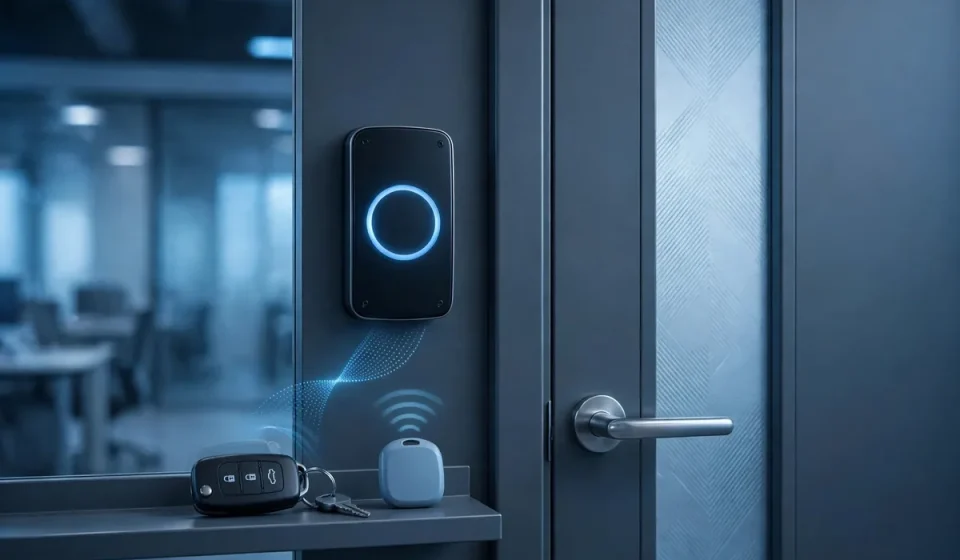

A key fob is a small, pocket-sized remote that locks, unlocks, and often starts a car or opens a secured door without inserting a traditional metal key. It looks simple — usually a plastic case with a few buttons and a key ring — but inside it is a small radio transmitter, a battery, and a coded chip that talks to a receiver in the vehicle or building. When you press a button, or simply walk up to a compatible car, that coded signal tells the system whether to grant access. Because key fobs sit at the intersection of convenience and security, understanding how they work matters far beyond the driveway. A weak fob, a dead battery, or a poorly protected signal can leave a car or a workplace vulnerable, while a well-chosen and well-protected fob can make everyday access faster and safer.
What Is a Key Fob?
In plain terms, a key fob is a remote keyless entry device. The word “fob” originally described a small ornament or pocket-watch chain, but in modern use it means the remote itself. Most car fobs include lock, unlock, trunk, and panic buttons, and many also include remote start. Building fobs may have no buttons at all: you simply hold or tap the fob against a reader to open a door.
Inside a typical fob, a circuit board carries a transmitter, an antenna, and a unique identifier. The receiver — in a car, a door controller, or a garage opener — checks that identifier and, if it matches, performs the requested action. Some systems add rolling codes, so the transmitted code changes after every use and a captured code cannot simply be replayed.
How Does a Key Fob Work?
A key fob works by sending a short-range radio signal, usually in the 315 MHz or 433 MHz range in many regions, although exact frequencies vary by manufacturer and country. When you press a button, the fob wakes up, encrypts or encodes its identifier, and transmits it. The receiver decrypts the signal, verifies the code, and unlocks the door, opens the trunk, or sounds the alarm. For passive entry systems, the process is automatic: the car periodically sends a low-power challenge, the fob in your pocket answers, and the doors unlock when you touch the handle.
Battery-powered fobs use a small coin-cell battery, commonly a CR2032, that typically lasts two to four years. Passive RFID fobs, by contrast, draw power from the reader itself, so they need no battery but must be held very close to the reader. Understanding which type you have explains why one fob works from across a parking lot while another only works at a door.
Types of Key Fobs
Not all fobs work the same way. The table below compares the main types, how each communicates, and where you are most likely to encounter it.
| Type | How It Works | Common Use |
|---|---|---|
| RFID Key Fob | Passive chip powered by reader; tap or hold near reader to verify ID. | Offices, hotels, apartments |
| Smart Key / Proximity Key | Car detects fob nearby and unlocks or starts with push button; no key insertion. | Modern cars |
| Switchblade Key Fob | Metal key blade folds into fob; remote buttons plus physical key backup. | Older and mid-range cars |
| Remote Keyless Entry (RKE) Fob | Button press sends radio signal with rolling code to receiver. | Cars, garage doors |
| Key Card / Tag Fob | Flat card or small tag with RFID chip for contactless access. | Gyms, workplaces, transit |
When choosing a fob, match it to the receiver, not just the shape. A smart key will not work with a basic RFID reader, and a building tag will not start a car. Check compatibility, battery type, range, and whether the system supports rolling codes or encryption before buying a replacement, and buy from a reputable dealer or locksmith rather than an unbranded clone that may use weak security.
Common Uses for Key Fobs
Cars are the best-known use, but fobs also control garage doors, apartment and office doors, hotel rooms, storage units, and alarm systems. In workplaces, fobs do more than open doors: they can restrict access by floor, time of day, or role, and administrators can revoke a lost fob without changing every lock. That flexibility is a major reason buildings moved away from easily copied metal keys.
They work best as part of a wider access system: learn how cloud-based access control manages doors centrally, how access control entries define permissions, and how identity and access management ties a person to the right access level.
Key Fobs vs. Traditional Keys
Traditional keys are simple and need no battery, but they are easy to copy, hard to track, and expensive to replace if a master key is lost because locks must be changed. Fobs, by contrast, can be deactivated individually, reprogrammed quickly, and set to different access levels. Their downsides are real, too: batteries die, electronics can fail, replacement fobs can be costly, and radio signals create new attack routes that a metal key never had.
Key Fob Security Risks: Relay Attacks and Other Threats
Here is the angle many general guides underplay: a key fob is a wireless credential, and wireless credentials can be attacked without touching the fob or the car. In a relay attack, thieves use two devices — one near your fob inside your home and one near your car — to relay the fob’s signal over a longer distance, tricking the car into thinking the fob is beside it. The car unlocks, and in some cases it can be started and driven away, all while the real fob remains indoors.
Other risks include signal interception, code grabbing on older fixed-code systems, cloning of unencrypted RFID cards, and simple theft or loss. A fob left in a jacket pocket, a gym locker, or a car cup holder is not just a lost key — it is an active credential until it is deactivated. For buildings, a cloned or shared fob can also hide who actually entered, undermining audit logs that access systems are meant to provide.
How to Protect Your Key Fob
Protection starts with distance and shielding. Store fobs away from exterior doors and windows, use a Faraday pouch or metal box at home to block relay signals, and test that the pouch actually works by trying to unlock the car while the fob is inside it. Turn off passive entry if your car allows it, use a steering-wheel lock as a visible second barrier, and keep your car’s software updated, since manufacturers patch fob and receiver flaws. At work, never share fobs, report a loss immediately so it can be revoked, and pair fobs with a PIN or second factor where the system supports it.
What to Do If Your Key Fob Is Lost or Stops Working
First, check the battery: a weak coin cell is the most common cause of a fob that works only at very close range or not at all. Replace it with the correct size, usually printed inside the case, and retest. If the fob is lost, contact your dealer, locksmith, or building administrator promptly, ask for the old fob to be removed from the system, and have a replacement programmed. Keep a spare fob in a safe place, and never leave a spare inside the vehicle it opens.
Conclusion
A key fob is far more than a convenient button. It is a coded, wireless key that blends radio technology, encryption, and access control into a device you carry every day. Choose the right type for your car or building, protect its signal, and treat a lost fob as an urgent security issue — and you will get both the convenience and the protection it was designed to provide.
Frequently Asked Questions
What is a key fob in simple terms?
It is a small remote that uses radio signals to lock, unlock, or start a car, or to open a secured door, without a traditional metal key.
Do key fobs need a battery?
Most car fobs do, usually a coin-cell battery lasting two to four years, but passive RFID fobs are powered by the reader and need no battery.
Can a key fob be hacked?
Yes, in some cases. Relay attacks can extend a fob’s signal, older fixed-code systems can be intercepted, and unencrypted cards can be cloned, so shielding, updates, and prompt deactivation matter.
What should I do if I lose my key fob?
Report it immediately to your dealer, locksmith, or building administrator, have the lost fob removed from the system, and get a replacement programmed rather than relying on the lost fob.
Are key fobs more secure than traditional keys?
Usually, yes, because fobs can use rolling codes, be deactivated individually, and support access levels, but they still need protection against relay attacks and cloning.



[…] Strong authentication, such as a hardware key, makes a stolen device useless. See our guide to what a key fob is for a common second factor used with thin […]
[…] technology powers phone wallets such as Apple Pay and Google Pay, and other everyday devices. A key fob that unlocks your car, for example, uses similar short-range radio technology to prove its identity […]