

Key Takeaways
- Buyers need practical details, not only attractive images.
- Clear floor plans, pricing guidance, and community information reduce uncertainty.
- Useful comparison tools help visitors identify homes that fit their routines.
- Mobile-friendly pages and simple next steps make research easier.
- Specific proof and current information build trust faster than broad marketing claims.
A home builder website should make a major decision feel more understandable. Buyers often research several communities, layouts, and price points before speaking with a sales representative, so the site needs to answer meaningful questions early. Reviewing effectivehome builder website design examples can help clarify how visual presentation and practical information can work together. Beautiful photography has value, but it cannot fully explain how a home works. A buyer may like the look of a kitchen while still wondering where the pantry is, whether the dining area fits a table, how far the laundry room is from the bedrooms, or whether there is enough storage. Strong websites close that gap between first impressions and everyday decision-making.
Start With a Clear Buyer Journey
Every page should lead naturally to the next question rather than forcing visitors back to the homepage. A simple journey can look like this:
- Choose a community or service area.
- Browse available home styles and homesites.
- Compare floor plans, dimensions, and core features.
- Review pricing, timing, and available options.
- Request details, schedule a tour, or contact the sales team.
When this path is clear, buyers can move at their own pace. It also helps sales teams receive more informed inquiries from people who already understand the basics.
Make Floor Plans Easy to Read
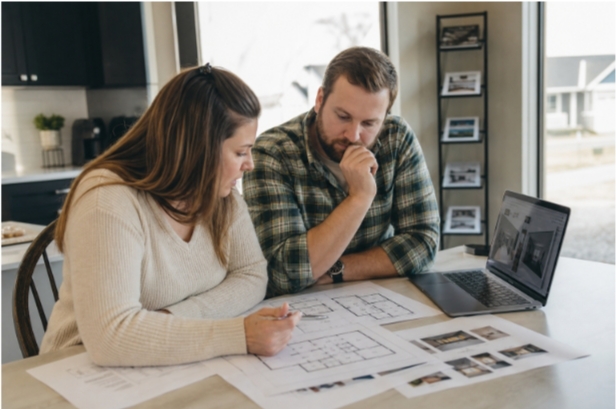
Floor plans are often the most useful page on a builder’s website because they turn general preferences into concrete comparisons. Plans should clearly label bedrooms, bathrooms, entrances, storage spaces, garages, and outdoor areas. Include total square footage alongside room dimensions whenever possible, and add a simple legend for abbreviations or symbols. Give visitors both a quick overview and a detailed view. They should be able to zoom, swipe on a phone, download, or print the plan without struggling through complicated controls. Interactive plans can be valuable when they reveal room photos, dimensions, or alternate layouts, but the essential information should remain visible even without interaction.
Use Comparisons That Answer Real Questions
Comparison features should help buyers decide, not make them feel like they are reading a spreadsheet. Let visitors compare the details that affect daily life:
- Bedroom and bathroom counts.
- Total and living-area square footage.
- Garage capacity, basement availability, and outdoor living space.
- Standard features versus paid upgrades.
- Office space, guest accommodations, and storage options.
Plain-language labels can add helpful context. Terms such as “Good for Remote Work,” “Extra Storage,” or “Best for Entertaining” guide attention without pretending that one layout is right for everyone.
Show the Home in Its Real Setting
A home is more than its walls. Community pages should include maps, nearby roads, parks, schools, shops, and public services, along with straightforward explanations of lot orientation, setbacks, views, and outdoor space. Current photos are especially helpful. If an image is a rendering, staged scene, or future concept, label it clearly. Location details help buyers picture daily routines. A map and a short explanation of access points can be more useful than vague statements about convenience. Buyers should be able to understand what is nearby and what still requires a drive.
Balance Open and Private Spaces
Home layouts should be described according to how people actually live. Open kitchens and living areas may suit entertaining and shared family time, while enclosed rooms can offer quiet for work, studying, rest, or hobbies. Flexible rooms may change purpose as a household changes. Currentshifting floor-plan preferences also reflect the need for privacy, remote-work areas, and spaces that support multigenerational households. Builders can help buyers by explaining where a plan provides separation, connection, or flexibility instead of treating open layouts as the only desirable choice.
Explain Pricing Without Creating Confusion
Transparent pricing does not mean every final cost must be known immediately. It means buyers can easily see what is known, what may change, and what the base price includes. Separate base pricing from lot premiums, upgrades, allowances, closing costs, and optional features. A short glossary can prevent industry language from becoming a barrier. Each listing or plan page should show when pricing and availability were last updated. Avoid blending standard features with upgrades in photos or descriptions, because buyers may assume an item is included when it is not.
Make Interactive Features Useful
Digital tools are most effective when they are quick, optional, and easy to understand. Helpful options include room-by-room photo tours, virtual walkthroughs, community maps, simple finish selectors, and save-and-compare functions. Research intodigital-first buyer research reinforces that online exploration and in-person visits now support each other. Avoid excessive pop-ups, autoplay video, heavy animation, and controls that hide important information. If a feature slows the page or prevents a visitor from finding a floor plan, it is not improving the experience.
Build Trust With Proof, Not Hype
Specific details are more persuasive than phrases such as “quality craftsmanship” or “built to last.” Show completed projects with accurate descriptions, real customer feedback used with permission, relevant licenses or certifications, warranty information, and a plain-language overview of the building process. A completed-home photo becomes more credible when it identifies the project type, completion date, materials, and scope. Realistic construction timelines and easy-to-find staff contact information also show that the builder respects buyers’ need for clarity.
Answer Questions Before Buyers Ask
A useful FAQ section should cover practical concerns, including what comes with the base price, typical build timing, available customization, appliance or window-covering policies, tour options, inquiry follow-up, and the frequency of pricing updates. Keep answers direct and avoid requiring visitors to submit a form for basic information.
A Simple Website Review Checklist
- Open the site on a phone and find a floor plan within one minute.
- Check whether pricing is understandable without industry knowledge.
- Confirm that maps, photos, availability, and contact details are current.
- Test the contact form and remove unnecessary fields.
- Review every page for broken links, outdated claims, and unclear renderings.
Measure Whether the Website Helps
Track floor-plan page visits, saved plans, tour requests, calls, form completion rates, and mobile load times. Ask sales staff which questions buyers repeat most often, then improve the pages that should have answered them. Traffic alone is not the goal. A smaller audience that understands the homes, costs, and process is more valuable than a large audience that leaves confused.
Conclusion
The best home builder websites make the buying process clearer, not louder. They show homes honestly, explain costs carefully, make layouts easy to compare, and provide a simple next step when visitors are ready. By removing avoidable guesswork, builders can give buyers more confidence before the first conversation or community visit. Clear navigation, updated listings, realistic photography, interactive floor plans, and transparent information about communities, timelines, and available features help visitors make informed decisions at their own pace. When every page answers common questions and supports the next stage of the buying journey, a website becomes more than a marketing tool, as it becomes a practical resource that helps future homeowners explore options with greater confidence and less uncertainty.
Related Reading
Discover why seamless online experiences are key to business success and explore privacy-first web design in a cookie-less world.
Home Builder Website Design That Keeps Buyers Moving Forward
Ultimately, good home builder website design connects every helpful detail into one clear path. For instance, floor plans, pricing guidance, and community information should support each other, rather than compete for attention.
Moreover, home builder website design should make the next step obvious on every screen size. Consequently, buyers can save a plan, book a tour, or ask a question without searching for the right button.
In addition, regular reviews keep home builder website design accurate as prices, availability, and buyer questions change. Therefore, a home builder website design that is reviewed often will guide buyers more confidently toward the right home.



[…] more about building a website that guides buyers to the right home and discover how professional web design and SEO help small businesses grow […]
[…] See how professional web design and SEO help small businesses grow online and learn about building a website that guides buyers to the right home. […]
[…] Related Reading: Learn more about cloud-based content management and discover the keys to building a website that guides your visitors. […]
[…] Reading: Building a Website That Guides and Uploadblog Com […]