
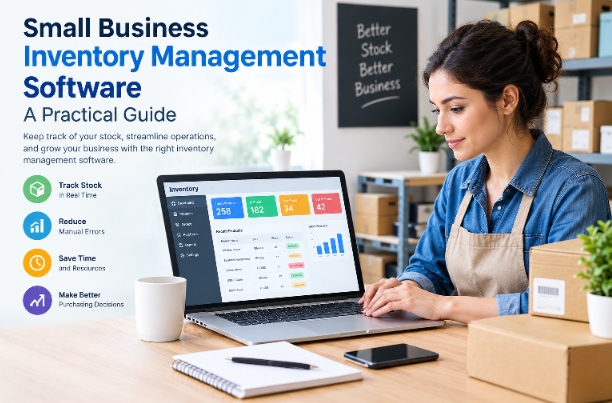

Managing inventory efficiently can be challenging for growing companies, especially when stock levels, orders, purchases, and product information are tracked manually. Skyware Inventoroffers a practical approach to small business inventory management software, helping businesses organize inventory information and keep better control of their stock. Choosing the right inventory system can reduce manual work, improve accuracy, and make everyday business operations easier to manage.
What Is Small Business Inventory Management Software?
Small business inventory management software is a digital solution designed to help companies monitor and manage their products and stock. Instead of relying on spreadsheets, notebooks, or disconnected records, businesses can use centralized software to keep important inventory information organized.
Depending on the platform, inventory software can help businesses track product quantities, monitor stock movements, manage purchasing information, and maintain more accurate records.
For a small business, having this information available in one place can make inventory management more efficient and easier to control.
Why Inventory Management Matters for Small Businesses
Inventory directly affects many areas of a business. Having too much stock can tie up money, while having too little can result in missed sales and unhappy customers.
Effective inventory management helps businesses understand what products they have, what is selling, and when additional stock may be needed. This can support better purchasing decisions and reduce unnecessary inventory costs.
Small businesses can particularly benefit from organized inventory processes because they often have limited staff and resources.
Benefits of Inventory Management Software
Using inventory management software can provide several practical advantages.
Better Stock Visibility
A centralized inventory system gives businesses a clearer view of their available products. Instead of checking multiple spreadsheets or physical records, employees can access current inventory information from the software.
Better visibility can make it easier to identify low-stock products and avoid unnecessary purchasing.
Fewer Manual Errors
Manual data entry can lead to mistakes. Incorrect quantities, duplicated records, or outdated spreadsheets can make it difficult to determine the actual stock available.
Inventory management software can help organize information and reduce the amount of repetitive manual work involved in tracking products.
Improved Purchasing Decisions
Knowing current stock levels can help businesses make more informed purchasing decisions. Rather than ordering products based on assumptions, businesses can review their inventory information before placing new orders.
This can help reduce overstocking while making it easier to maintain sufficient products for customers.
Saves Valuable Time
Manually checking and updating inventory can consume significant amounts of time. Software can streamline many routine inventory tasks, allowing employees to spend more time on customer service, sales, and other important business activities.
Features to Look for in Small Business Inventory Software
Not every inventory platform provides exactly the same features. Small businesses should consider their operational requirements before selecting a solution.
Important features may include:
- Product and stock tracking
- Inventory quantity management
- Purchase and sales records
- Search and filtering tools
- Reporting capabilities
- User access controls
- Cloud-based access
- Data organization and management
- Integration with other business tools
The right combination of features depends on the size and type of business.
Cloud-Based Inventory Management
Cloud-based inventory management has become increasingly useful for businesses that need access to information from different locations.
Instead of keeping inventory data only on one computer, cloud-based systems can make information accessible through supported devices and internet connections. This can be particularly helpful for businesses with remote employees, multiple locations, or owners who need to monitor operations while away from the workplace.
Businesses should still consider account security, user permissions, backups, and other security practices when using cloud-based inventory software.
How Inventory Software Can Improve Accuracy
Inventory accuracy is essential for making good operational decisions. If a business believes it has 100 units available when only 70 are actually in stock, the resulting purchasing and sales decisions may create problems.
Digital inventory systems can help businesses maintain more consistent records by keeping stock information organized. Employees can also establish regular inventory checks to compare recorded quantities with physical stock.
Combining software with good inventory procedures can provide better results than relying on technology alone.
Choosing the Right Software for Your Business
The best inventory management solution depends on the company’s specific needs. A small online store may require different capabilities than a wholesaler, retailer, or growing company with multiple product categories.
Before choosing software, businesses should consider:
- How many products need to be tracked?
- How many employees will use the system?
- Does the business need remote access?
- Which inventory tasks currently take the most time?
- Does the business need reporting features?
- Will the software need to connect with other tools?
- What security and access controls are required?
Answering these questions can help businesses identify the features that are genuinely useful instead of paying for unnecessary functionality.
Inventory Management Software vs. Spreadsheets
Spreadsheets can be useful for very small operations, but they may become difficult to manage as inventory grows.
With spreadsheets, employees may need to manually update quantities, check formulas, maintain different versions, and share files between team members. These processes can become increasingly complicated as product numbers and order volumes increase.
Inventory management software is specifically designed for inventory-related tasks, making it a more structured option for businesses that have outgrown basic spreadsheets.
Security Considerations for Inventory Software
Inventory data can contain valuable business information, so security should be considered when selecting software.
Businesses should look for appropriate account protection and access controls. Employees should use strong passwords and, where available, multi-factor authentication. User permissions should also be reviewed regularly so that employees only have access to information necessary for their roles.
Keeping devices and browsers updated is another important part of protecting accounts and business data.
Getting Started With Inventory Management Software
Moving from manual inventory tracking to dedicated software does not have to happen all at once. A business can begin by organizing its existing product information and identifying the inventory problems it wants to solve.
The next step is to choose software that matches the company’s requirements and prepare employees to use it correctly. Product information should then be entered or imported carefully, followed by regular checks to ensure that inventory records remain accurate.
Once the system is established, businesses can review their processes and make adjustments as their operations grow.
Final Thoughts
Small business inventory management software can simplify the way companies track products, organize stock information, and manage everyday inventory tasks. By replacing scattered records with a centralized system, businesses can improve visibility, reduce manual work, and make more informed inventory decisions.
The right solution should match the company’s size, workflow, products, and future growth plans. With a suitable inventory management system and consistent security practices, small businesses can build a more organized and efficient approach to managing their stock.


