
The world is now being digitalized and organizations and individuals are shifting their data and programs to the cloud. The fact that cloud computing has been linked to colossal benefits such as scalability, flexibility and saving of money does not mean that it does not come with a new set of security risks. The issue of cloud security is currently ranked as one of the highest concerns amongst organizations all around the world since cyber threats are undergoing changes.
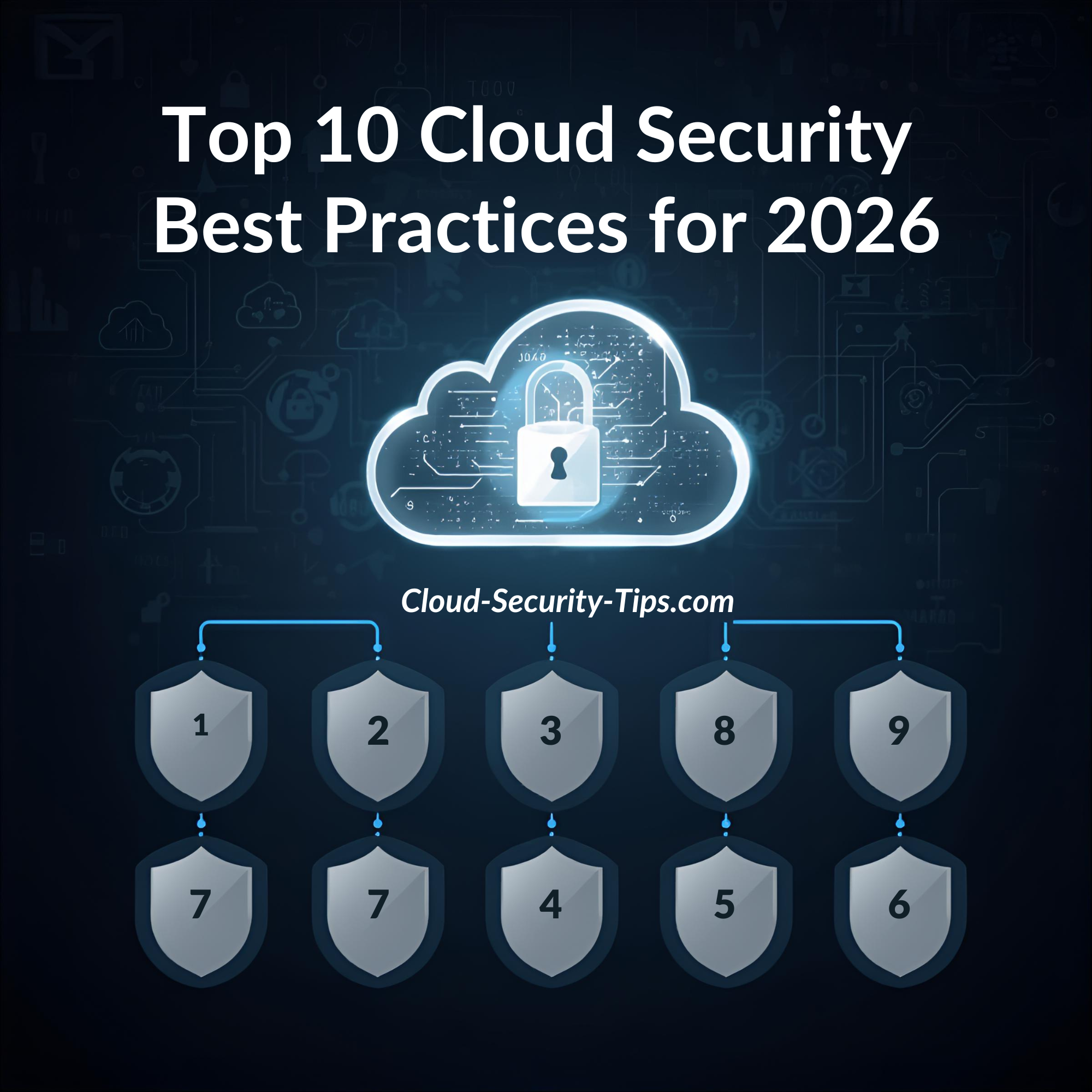
Cloud-Security-Tips.com mission is to provide you with the practice information that will help in protecting your cloud infrastructure, data and applications. This guide will inform about the top 10 cloud security best practices in 2026 that all organizations need to adopt to ensure that they remain safe.
1. Best Passwords and Multi-Factor Authentication (MFA).
The initial line of defense that is operated by the cloud accounts is passwords which can be easily exploited by the attacker due to weak or used passwords.
Best Practices:
- Use different and challenging passwords on each cloud account.
- Where possible, use Multi-Factor Authentication (MFA).
Password managers are to be considered to store passwords and generate them.
MFA further enhances its protection by ensuring that the user identifies themselves by using a variety of means meaning that it would be very difficult to be compromised even in case the passwords are stolen.
2. Maintain Cloud Software and Applications.
One of the most prevalent vulnerabilities that are used by cybercriminals is unpatched software.
Tips:
- Periodically refresh all the cloud-based software and applications.
- Automatic updates should be possible .
- Keep track of vendor security alerts of vital updates.
Updating your systems means that the known vulnerabilities are addressed making it less likely that an unauthorized access will occur.
3. Encrypt Sensitive Data
Breach of data is expensive and a reputation killer. The encryption of data makes it impossible to be read by the interception of data through the use of the encryption.
Key Recommendations:
- Store and transmit data encrypted (data stored) and on the network (data flowing across the network).
- High security requirements should be encrypted like AES-256.
- Secure your keys – Do not store your keys with your data.
Personal information, financial reports, and intellectual property are of great importance as they must be encrypted .
4. Observation and Control of Cloud Usage.
Cloud security is crucial in visibility.
Surveillance will deter suspicious behavior that would otherwise remain unnoticed until late.
Best Practices:
-
Allow logging of cloud activities to every user and application.
- Periodically review audit access logs and security events.
- To detect trends and anomalies with the help of Security Information and Event Management (SIEM) tools.
Monitoring assists organizations in fast detection of probable threats and proactively stop violation.
5. Introduce Least Privilege Access.
All the resources should not be available to all the employees. Excessively granted accounts augment the attack surface.
Tips:
- Provide job access control.
- Fine-grained access can be controlled with the use of role-based access control (RBAC).
The least privilege principle is applied and restricts the number of damages that can be inflicted in the possibilities of account compromising.
6. Secure APIs and Integrations.
Cloud applications rely on APIs to allow the exchange of services. Nevertheless, attackers can use insecure APIs.
Recommendations:
- Apply API authentication and authorization functions.
- Check all the input in order to avoid injection attacks.
- Check API logs on a regular basis.
Gaining control over APIs without APIs being a weakness in your cloud infrastructure.
7. Enterprise Reliable Cloud Security Tools.
It may not be sufficient to rely on the default security settings of a cloud provider. Protection can be improved by supplementing them with special tools.
Suggested Tools:
- Monitoring and control cloud access security brokers (CASB).
- Cloud-based endpoint device protection.
- Threat intelligence, intrusion detection, and firewalls.
A multi-layered security will help in enhancing detection, prevention, and response to cyber threat.
8. Disaster Recovery and Backup plans.
No system can be immune to failure and attack. Through frequent back-ups and proper plan of disaster recovery, downtime and loss of data can be reduced.
Best Practices:
- Raycaster Schedule periodic backups.
- Backup of stores in different and safe places.
- Recovery Intermittently recover tests with reliability objective.
With a defined recovery plan, businesses will not go down even during ransomware attacks or crashes.
9. Carry out Employee Security Training.
Give details of proper handling of secure passwords and how to use the devices. The employees are expected to be trained to be conscious of threats, and comply with security.
Training Tips:
- Coach periodic cybersecurity training.
- Train employees on the methods of identifying social engineering attacks and phishing.
- Give instructions on how to handle secure passwords and use of devices.
- An educated team may be the first line of defence as far as cloud security is concerned.
10. Monitor Compliance and Regulations.
Such industries as healthcare, finance and government are sensitive to the compliance of regulations in particular. The consequence of non-compliance could be enormous fines and reputation.
Steps to Follow:
Make sure that the cloud providers comply.
Arbitration reduces the risk of lawsuits and earn the families of clients and users trust.
Conclusion
Cloud security is not a single endeavor, but a continuous process that is subject to change due to technology and threats. Through these 10 best practices in 2026, the organizations will go a long way in mitigating the risk of data breach, ransomware attacks, and other cyber threats.
Keep in mind: passwords that are strong, encryption, monitoring, proper access control and employee training are the basis of a secure cloud environment. Timely updates, secure APIs and sound security tools offer extra protection. Lastly, backups should always be in place and applicable regulations should be adhered to in order to have business continuity and trust.