

Key Takeaways
- 1U rackmount servers are revolutionizing IT infrastructure by offering high performance in compact designs.
- These servers are pivotal in edge computing, AI inference, and space-constrained environments.
- Advancements in processor technology and cooling solutions enhance their efficiency and versatility.
The Rise of 1U Rackmount Servers
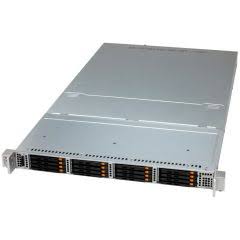
Amid the rapidly changing landscape of IT, organizations are prioritizing equipment that delivers both power and efficiency within a minimal footprint. A notable response to this trend has been the growing adoption of 1U rackmount servers, which measure just 1.75 inches in height but can host robust processing power suited to today’s advanced computing needs. The compact 1U server design enables greater data center density, allowing companies to maximize their physical real estate. For more information about these versatile platforms, visit https://nfina.com/nfina-servers/rackmount-servers/1u-server/. Behind the surge in popularity are the demands for faster data processing, real-time analytics, and scalable infrastructure. Companies can deploy dozens of 1U servers in a single rack, empowering them to consolidate operations and simplify management. These units are not just about saving space; they also help organizations adapt to changing workloads and emerging business challenges without costly and disruptive overhauls. As businesses increasingly migrate applications to the cloud and adopt edge computing models, the need for reliable, high-density processing grows. 1U rackmount servers offer an effective solution, presenting a balanced combination of computing power, energy savings, and ease of integration. This adaptability is crucial as enterprises respond to evolving technology trends and client expectations. Comparisons with traditional tower or blade servers further highlight the versatility of the 1U form factor. While tower servers are often constrained by size, and blade systems can be complex to maintain, 1U servers stand out for their straightforward deployment and performance in tightly packed environments. These features have helped them gain favor across industries like finance, healthcare, telecommunications, and military applications.
Advancements in Processor Technology
The engine that powers today’s 1U rackmount servers is cutting-edge processor technology. Recent designs incorporate server-grade CPUs with high core counts, broad memory support, and features tailored for specific workloads like AI inference, big data analytics, or multi-tenant cloud hosting. For example, the Ampere Altra processors, used in NextComputing’s Nucleus 1U, provide up to 192 single-threaded cores, combining efficiency with formidable performance for demanding applications. These advancements have minimized the performance gap once observed between small-form-factor and larger, multi-unit servers. The ability to handle concurrent workloads without throttling or excessive energy use makes 1U rackmount models especially attractive for modern IT environments.
Enhanced Cooling Solutions
Maintaining optimal operating temperatures is a compelling challenge for dense server configurations. Newer 1U systems use improved airflow designs, advanced heat sinks, and even liquid-cooling options to efficiently dissipate heat from critical components. This ensures that performance does not degrade over time, even when units are stacked closely together in restrictive spaces. Liquid cooling, once reserved for large, costly server environments, is now making its way into compact chassis, enabling 1U servers to deliver enterprise-class performance while preventing overheating. The shift toward energy-efficient coolers is also helping cut operational expenses across data centers worldwide.
Applications in Edge Computing
The trend toward distributed computing is fueling new uses for compact servers near the data source. Edge computing environments, which demand real-time processing and minimal latency, are an ideal match for 1U rackmount solutions. Their small footprint allows for easy installation in on-premises racks, remote industrial sites, or urban micro data centers where space and power are limited. Processing data at the edge rather than routing everything to a central cloud server enhances responsiveness for applications like AI inference, IoT analytics, and local content delivery. Many organizations turn to 1U servers to balance high performance with the agility required for decentralized workloads.
Deployment in Space-Constrained Environments
Beyond traditional data centers, 1U servers are being deployed in uniquely challenging environments, such as on naval vessels and in mobile command centers. General Micro Systems’ “Shorty” 1U servers, designed for U.S. Naval use, exemplify the benefits of high-performance computing in exceptionally tight quarters while maintaining all necessary ruggedness and performance characteristics. Other organizations leverage these solutions in healthcare settings, broadcast trucks, and research facilities. Their adaptability makes them a go-to choice wherever physical infrastructure must be limited or mobile, but without sacrificing performance or reliability.
Energy Efficiency and Sustainability
The modern 1U server is engineered to deliver exceptional performance without excessive power consumption. Innovations in energy-efficient power supplies, low-voltage processors, and intelligent management tools help data centers reduce their environmental impact and lower operational costs. This approach meets the growing need for green IT practices, aiding sustainability efforts without compromising on computational capability.
Scalability and Flexibility
One of the greatest strengths of the 1U form factor is its inherent scalability. Organizations can deploy servers incrementally, scaling horizontally as workload demands grow. Integrating additional units is straightforward, making it easy to expand infrastructure without major reconfiguration. This flexibility also allows for easy adaptation to new business needs and technological innovations as they arise. Remote management capabilities further strengthen the value of these systems. Integrated monitoring, firmware controls, and automated alerts give administrators visibility across large deployments without requiring frequent physical access. That operational convenience is particularly useful for branch offices, colocation facilities, and edge locations staffed by small teams. When paired with thoughtful rack planning, redundant power strategies, and workload-aware configuration, 1U platforms can support dependable growth while keeping service interruptions, maintenance demands, and infrastructure complexity under control over time and across changing conditions.
Conclusion
1U rackmount servers sit at the forefront of modern IT infrastructure by delivering powerful performance within the narrowest confines. Their ongoing evolution, driven by processor innovation, enhanced cooling, and energy efficiency, enables broad deployment in data centers, at the edge, and in space-limited environments. Businesses looking to optimize their operations can benefit greatly from the versatility, scalability, and sustainability of these compact servers as the digital world continues to expand and diversify. Modern 1U systems also support virtualization, cloud-native applications, artificial intelligence workloads, and high-speed networking, making them suitable for a wide range of business and enterprise needs. Their efficient design maximizes rack space, reduces power consumption, and simplifies maintenance without compromising reliability. As organizations continue to modernize their IT infrastructure, 1U rackmount servers provide a cost-effective, future-ready solution that supports operational efficiency, business growth, and the flexibility to adapt to evolving technology demands.